
[Original published on December 13, 2024; Translated by J. Tsuchiya/A. Taguchi]
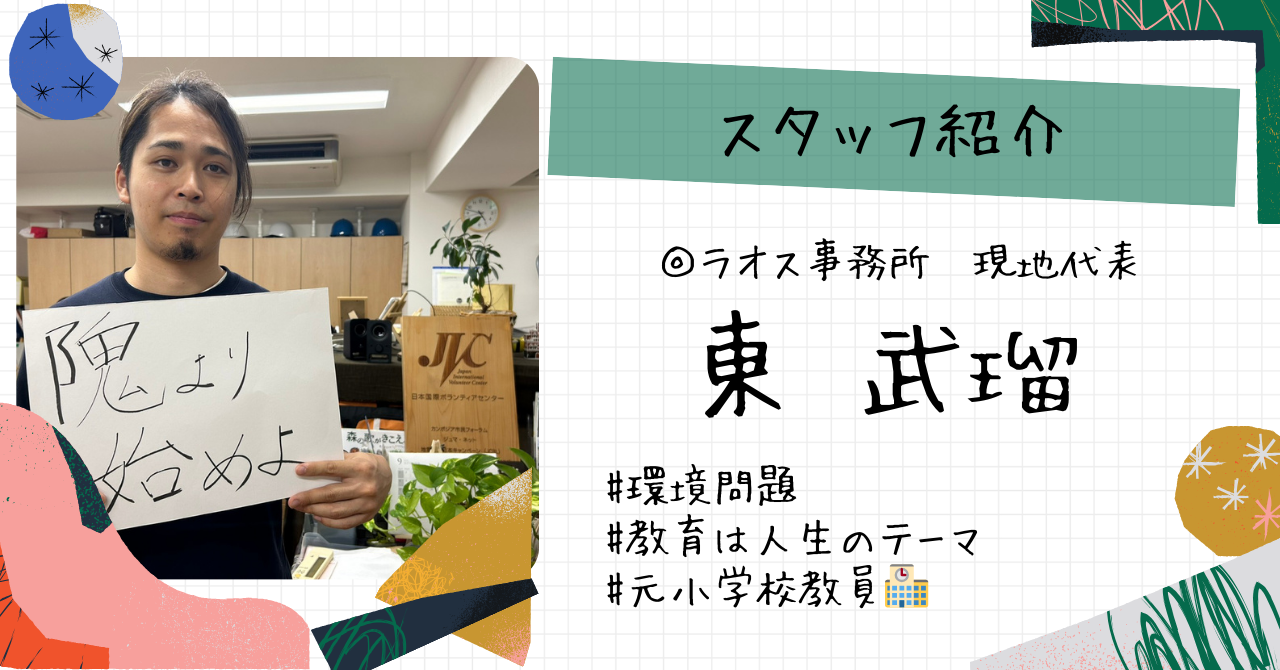
Hello! We are Ishikawa, Tsuchida, and Fukami. We work for JVC as interns. This time, we interviewed Mr. Takeru Higashi, the representative of the Laos Office. Please read until the end!
Q1. What kind of a man is Mr. Higashi?
He was born in Tokyo and raised in Tokorozawa, Saitama Prefecture. He became interested in environmental issues while growing up in an area surrounded by nature. He majored in pedagogy at university and sociology in graduate school. After graduating, he became an elementary school teacher, which had been his dream job. But after the assault on Dr. Tetsu Nakamura in Afghanistan in 2019, he decided to leave his job to lead the way to international cooperation. After studying a foreign language abroad, he became a member of JVC in April 2024 and started to be stationed in Laos.
Now, welcome, Mr. Higashi!
Q2. Please let us know about your hobbies and interests.
My hobbies include watching baseball games (I’m a fan of Yokohama BayStars) and saunas. I’ve loved hot springs and saunas for a long time, but since my visit to Finland last year, I now love them even more.
Q3. We’d like to know about your volunteer experience in India in detail.
When I was a first year graduate student, I wanted to go to India. Because I admired Mother Teresa, I chose Kolkata (Calcutta). In Kolkata, there were orphans’ homes, facilities for disabled people, and the homeless. I worked as a volunteer at the “Home for the Dying” (a facility for homeless people/incurable).
Before that, I had no intention to work abroad, but I think that volunteer experience opened my eyes to the world.
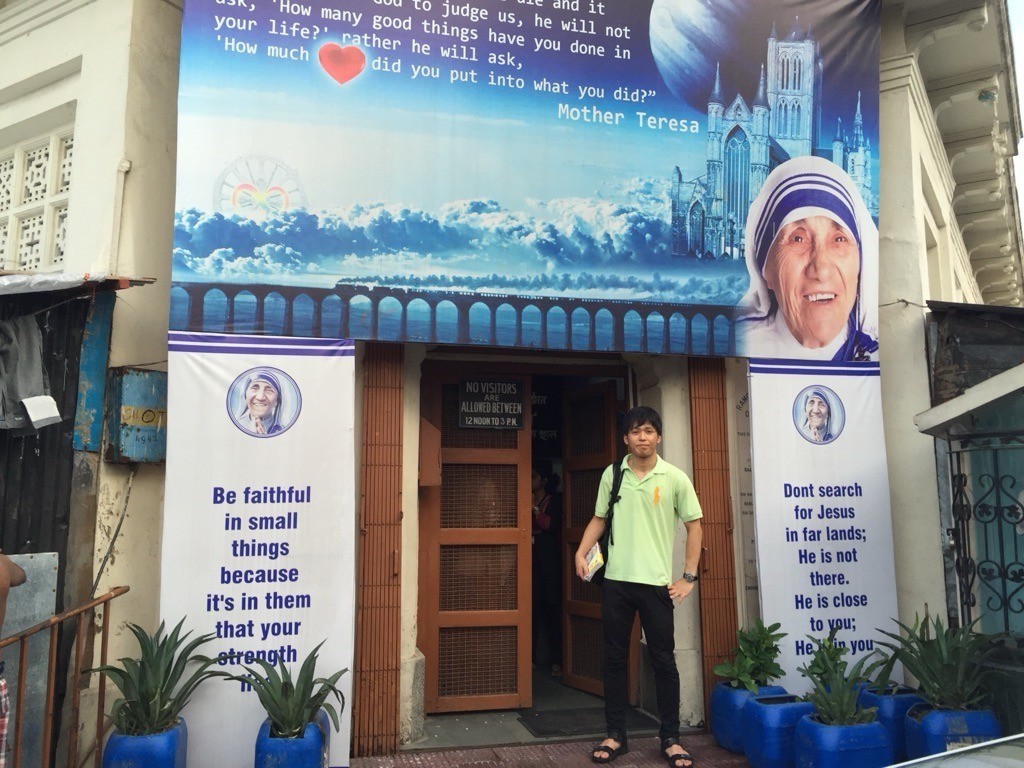
Mother Teresa’s “Home for the Dying”
Q4. What is the reason you became an elementary school teacher?
Because I love children, and they give me energy. In addition, I wanted to work with people instead of working in the office. Though I found being an elementary school teacher very hard, it was rewarding to see them grow.
At school, we did hands-on learning by going into nature, such as rivers and lakes, where I taught them concrete, specific problems. Regarding not only environmental problems, but also any problems, it is very important to understand them not superficially but deeply, and accurately, I think.
Q5. What is “education” for you?
For me, education is a lifelong theme. I like Shoin Yoshida, who raised people who changed society. Changing society requires people, and raising them requires education. I want to raise people who would change society and the world.
Q6. Why did you decide to leave the school to work for JVC?
I didn’t have any intention to work for a specific organization, but I happened to start working here. It seems it was fate to work for JVC in Laos.
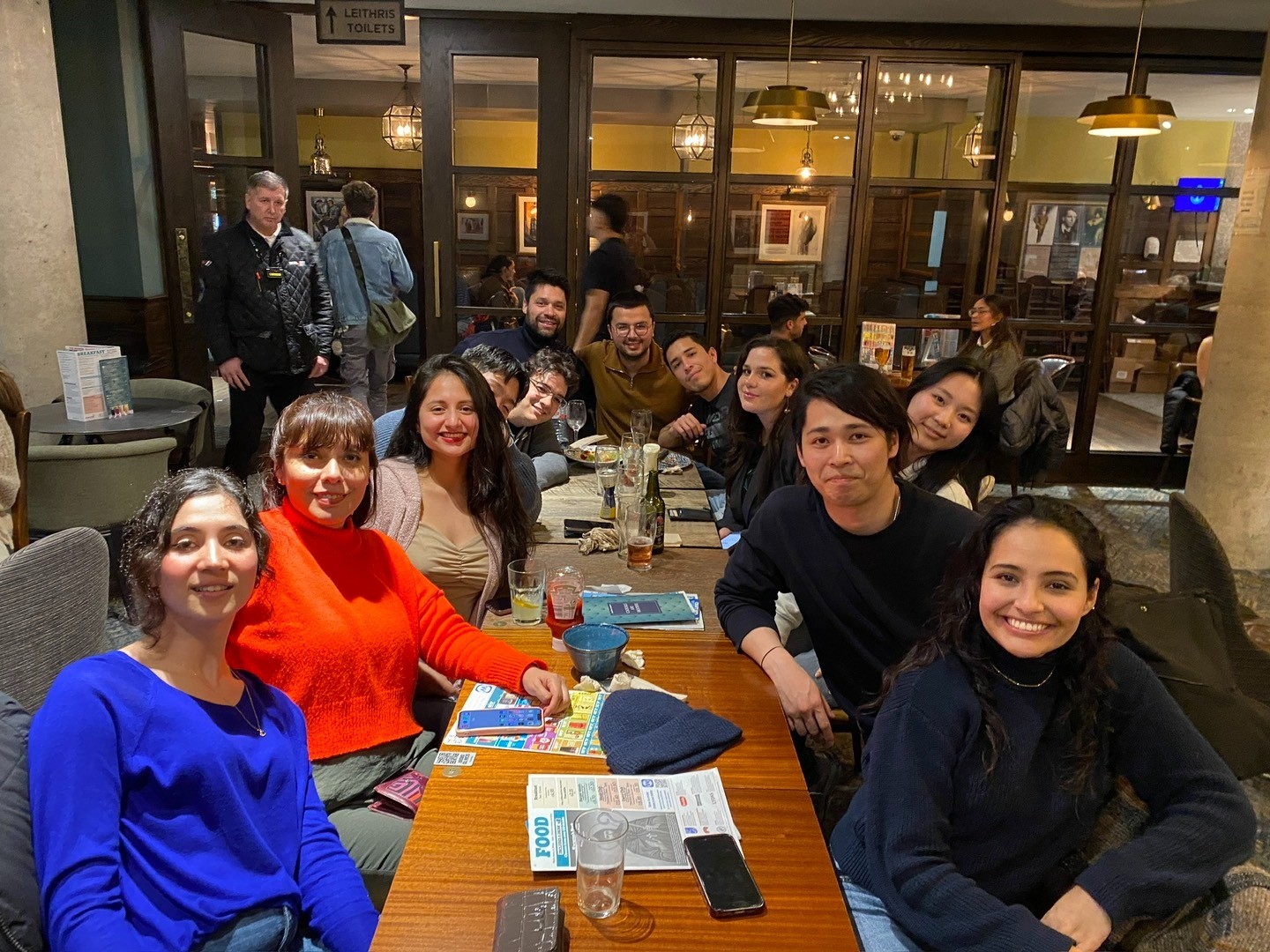
With friends when he was studying in Ireland
I wanted to work in the international scene, for example, to challenge global problems in the field. Therefore, I went to study English abroad for a year because international cooperation requires English proficiency. I spent three months in the Philippines and the rest of the months in Ireland.
– So, you mean you didn’t have any specific reason to choose JVC among those international organizations?
No, not really. But I thought I couldn’t do what is outside of my area of expertise, such as women’s empowerment or medical care. On the contrary, I had some experience in the field of education and environment, so I think working for JVC matches what I would like to take on as a challenge. When I was a teacher, I focused my efforts on environmental education, and I loved to take children to camps and allow them to experience nature.
Q7. Please tell us about Laos.
– What kind of image did you have of Laos?
I only knew about its hydroelectric dams because I once taught about South-East Asia in teaching practice in middle school and high school, so I happened to know about them. After I visited Laos, I had the impression that it had less population than Thailand and Vietnam. In that sense, it is easy to live there. I didn’t feel a big gap…
– What kind of work do you do in Laos?
In the Laos Office, in addition to the ordinary operations, I negotiate with the government, work in accounting, hire local staff, and practice office management.
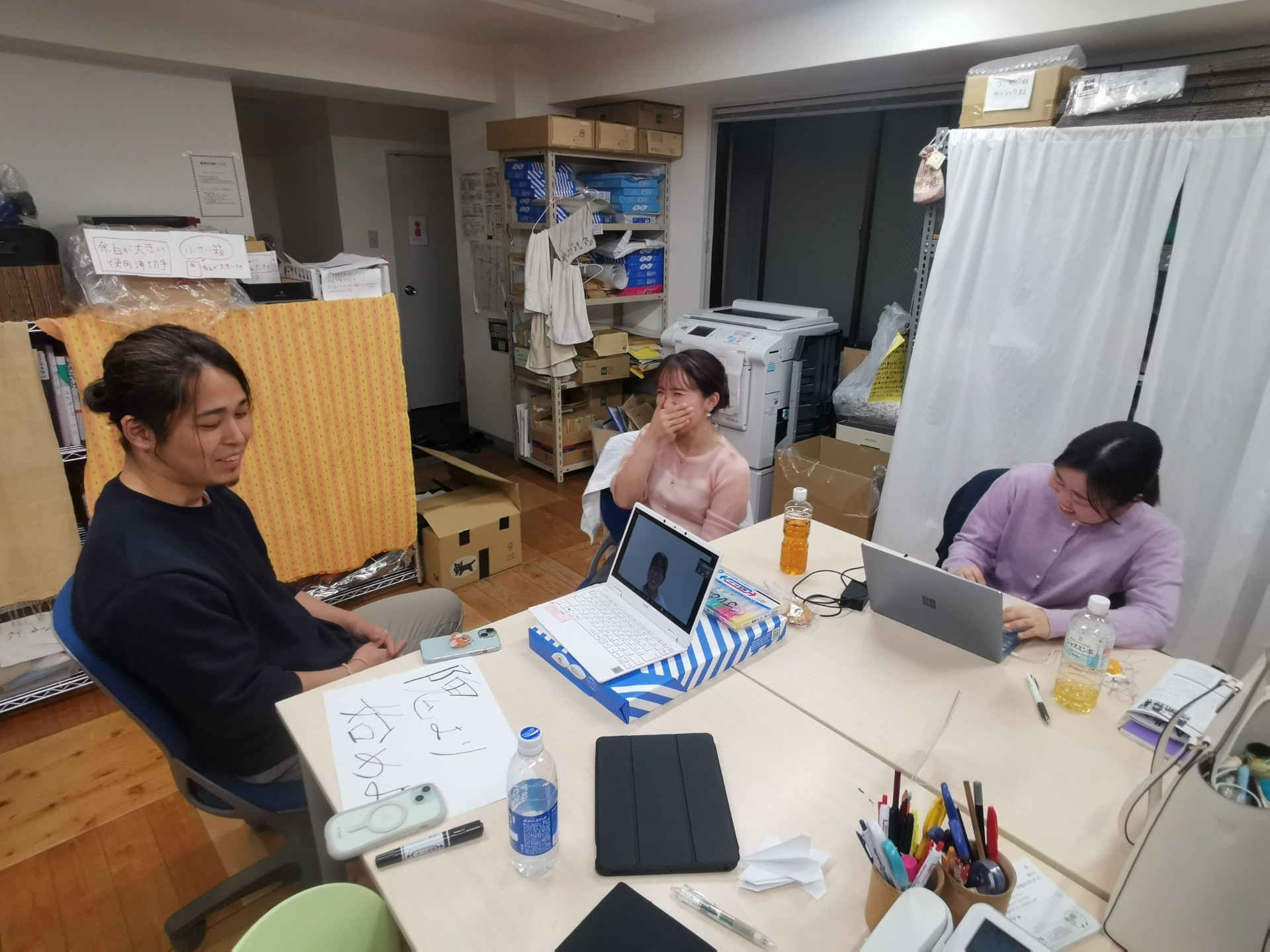
A scene from the interview
– Are there other aspects of Laos that you would like people to know about?
Even though Laos has been exposed to development, the natural environment remains. I want many to know that it has an abundant nature, which is a good part of Laos. Wild elephants and tigers seem to remain, although their numbers seem to have decreased due to development.
Q8. What is your motivation for action?
– Hearing what you have said so far, I think you are an unselfish person. I think you strongly want to help someone more than just improving yourself. What is your motivation, or driving force?
Of course, I have a feeling that I want to improve myself. But I also have a strong desire to tackle problems.
When I go to the wedding ceremonies of my friends, I sometimes hear that somebody earns twice as much as I earn, or that somebody got married, or that someone is going to buy a house. And when I was asked, “Why on earth did you leave your job and go abroad to study?”, it is because I think I’d rather solve social problems. Though it sounds a bit extreme, we will not be able to live on Earth in the future if we leave environmental problems unsolved. Of course, it is important to work for a company and support your family. But in this case, it might be hard to dedicate myself to solving social problems. So, I thought I would choose a job where I could directly solve social problems.
I think my driving force is partly to improve myself and partly to tackle social problems.
Q9. Do you have any words you cherish?
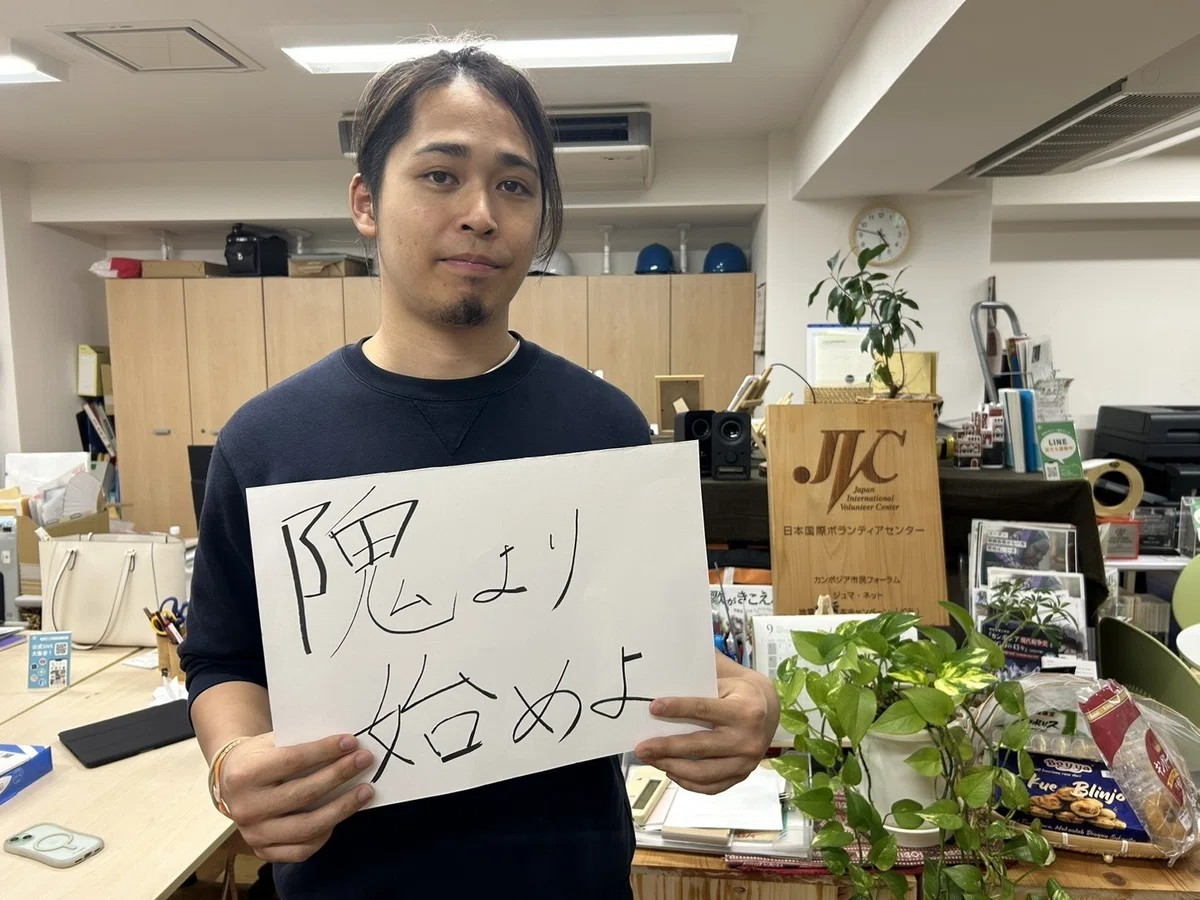
(He explained while writing the words he cherishes on the drawing paper.)
“Kai yori hajime yo”
It means, “Start with you, with what’s small.” This is a Chinese proverb, and Kai is a person’s name. This is the part that is missing in me, and it is an admonishment.
When you work in the field of international cooperation, the issues might be big, for example, “Preservation of the environment” or “Protecting people’s lives” in the activities in Laos, or “Stop the war.” Of course, it is important, but concentrating on what is in front of you is also important. I think you cannot solve half of the total environmental problems. War is impossible to halt. You want to stop it but cannot. Then you end up with less motivation. So, you, by yourself, need to do what you can do first, which I think is important.
Q10. What is your dream?
I want to be a man who can solve many problems. I won’t die until I do what I want to do because we live only once.
Q11. Please give some words for those who have any interest in international cooperation.
Be open-minded and try to know more about things happening abroad and domestically, but pay attention especially to international events.
In addition, you should keep in mind that what is true in Japan is not true in other countries. For example, in case you are working in Australia in a work-holiday system, you would find that there is a gap in salary between what you get in Japan and what you would have gotten in Australia. You may find two quite different positions here and there.
Share This:


